 YIO Technologies
THE KEY IDEA
Design the visitor journey first: what draws people in, what they can do and what they take away.
What do you want to happen at your event?
An experience can introduce a product, explain an offer or start a sales conversation. Choosing a purpose helps you decide what information to present and how much time visitors need. The format should fit the space, visitor numbers and pace of the event.
Before choosing screens or devices, give the audience one straightforward action. They might ask a question, explore an option or complete a short demonstration. That action becomes the thread running through the experience.
Assistants, immersive experiences and games
An intelligent assistant can answer questions about the brand and guide visitors through text or voice. A digital character, screen or holographic installation can give that conversation a physical presence. The display and configuration are defined for each project.
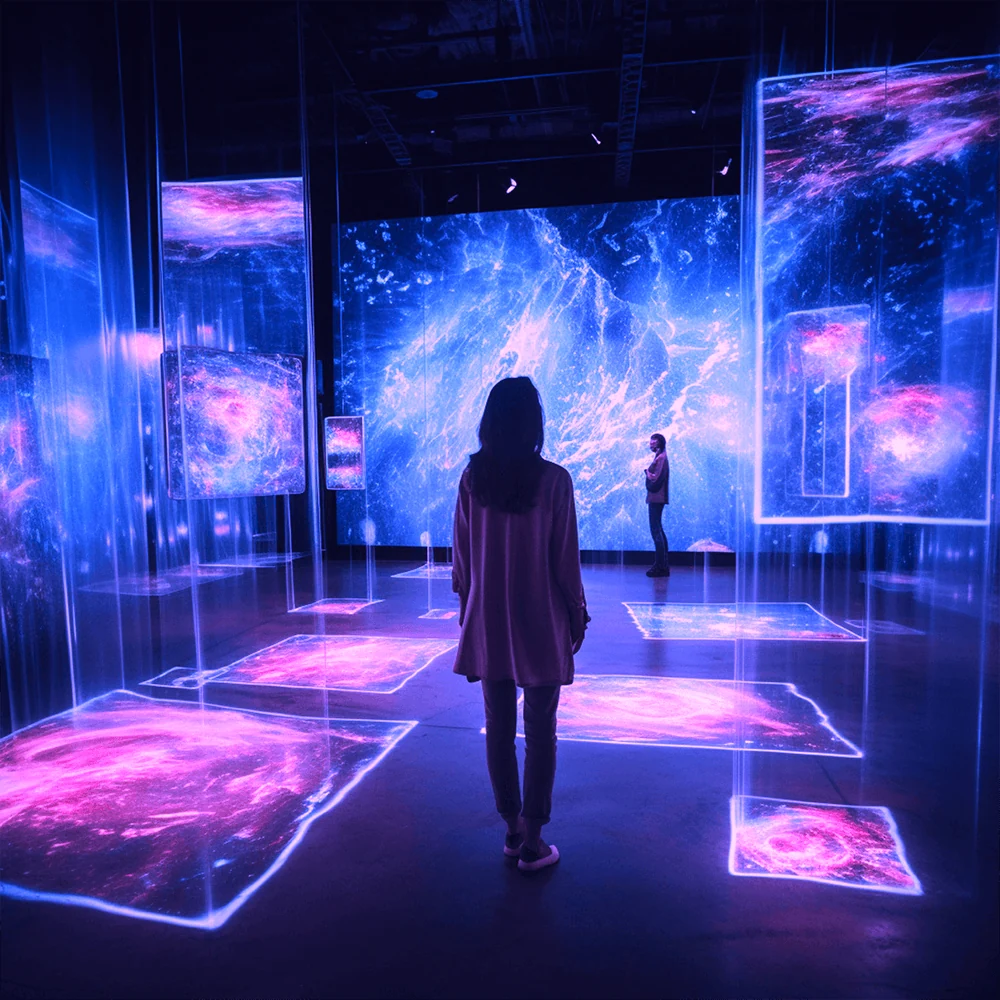
Augmented or virtual reality can help demonstrate something that is not physically on the stand. A branded game can introduce content through a challenge. Combine formats when they create a clear journey, rather than adding steps that make the offer harder to understand.
Make it easy to start and finish
The opening invitation should explain within seconds what someone can do. Provide visible instructions, a reasonable duration and an alternative for people who do not want to speak or wear a headset. Event staff should know how to guide visitors and handle problems.
The final step might lead to a product sheet, a conversation with staff or a request for information. If contact details are collected, make the form and explanation of their use part of the journey, without unnecessary steps.
Testing, delivery and learning
Run a test with the equipment, connectivity and noise levels expected at the event. Check readability, voice interaction and how the experience resets for the next person. Agree who updates the content and who provides support on the day.
Tie evaluation to the purpose: completed tasks, questions answered, product interest or requested contacts. Common questions and the points where visitors leave can also help improve the next event.
Frequently asked questions
Does a technology-led event need virtual reality?
No. Choose the format around the purpose and audience. A conversation on a screen may be enough to explain a product or answer questions.
Can the assistant use information about the event?
Yes. It is prepared with agreed content, such as the programme, services or brand information. If it needs changing data, a connection to the source is defined.
Content first published on . Reviewed and adapted for the blog on 14 November 2026.